
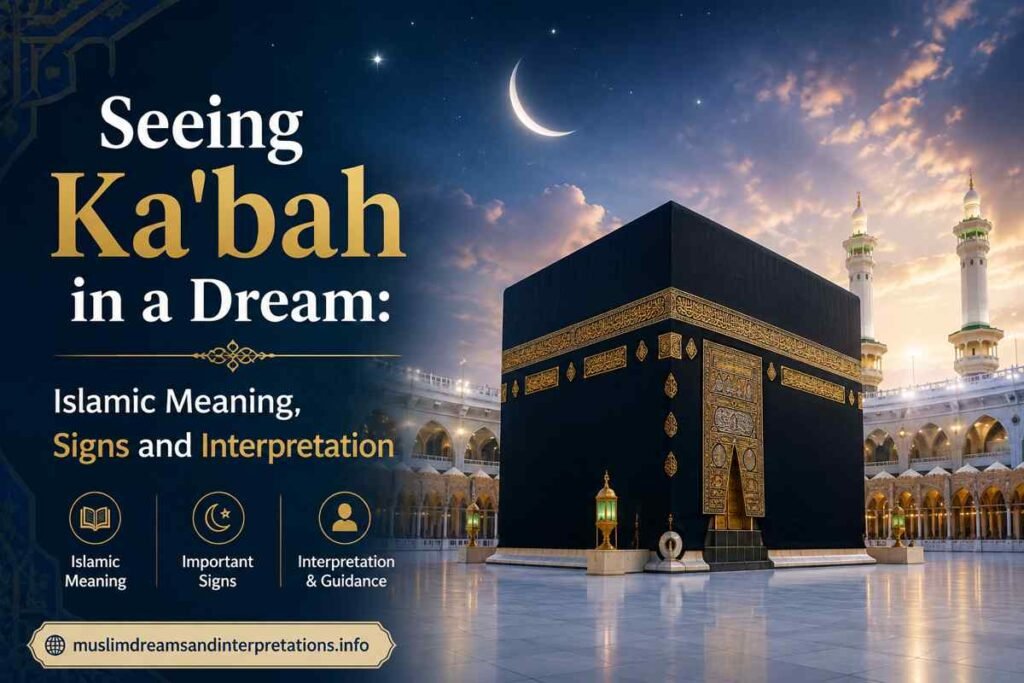
It is also possible to speak of such dreams which remain in your mind. You are waking up and staying in this place where you stood before the Ka’bah, or walking through the streets of Madina for some time, since there is still something in your chest which doesn’t want to be left right away. This dream, if that was the reason why you visited this website, is certainly not unique since it is one of the most popular dreams among Muslims, and no wonder why. After all, the Ka’bah is not the place you have seen in pictures somewhere, but the direction you pray to every day and the place where Ibrahim (Peace be Upon Him) rebuilt his house himself, which millions of people prepare their whole life for visiting.
But then the question rises, what does this dream mean? Since the ancient times many Islamic scholars tried to analyze such dreams, and probably the most famous one who is considered to be the founder of Islamic interpretation of dreams was Muhammad Ibn SirinSo let us look at how he (and others who came after him, like Al-Nabulsi) interpreted these kinds of dreams in specific scenarios.
Interpretation of Seeing the Ka’bah in Dreams in General
All classical interpretations are in agreement about the following aspect of such dreams: seeing the Ka’bah is regarded as one of the best dreams for Muslims in general. It means closeness to Allah, perseverance in prayer, and noble character. In case the person hasn’t made Hajj yet, many scholars will say that this dream can be interpreted as a promise for a pilgrimage in his or her future.
Al-Nabulsi gave it even more symbolic value.He pointed out that Muslims physically turn toward the Ka’bah in every single prayer — it’s the one fixed point everyone orients around — so seeing it in a dream can also represent leadership or guidance. A caliph, an imam, or simply someone in your life you look to for direction. There’s something almost poetic in that reading: the dream isn’t just about a building, it’s about what — or who — you’re pointed toward.
Broadly, this dream tends to get associated with:
- A deepening of faith and nearness to Allah
- Good character and moral integrity
- Prayers being answered
- Relief after a period of hardship or worry
- The possibility of Hajj or Umrah in the dreamer’s future
- Healing, for someone who’s unwell
- Marriage, particularly for someone who’s single
However, and it needs to be said explicitly, this is not an absolutely universal rule because the interpretation depends on the particular action in a dream, the circumstances of a dreamer’s life currently, and some other details.
Ibn Sirin’s Interpretation of Seeing the Ka’bah
Ibn Sirin’s writings on this dream are extensive, and honestly a bit more layered than the short summaries you’ll find floating around online. A few of his core interpretations stand out.
He considered a dream of the Ka’bah one of the most praiseworthy visions someone can have — a sign of abundant goodness, halal income, and blessings that tend to increase rather than fade. He also linked it directly to the fulfillment of major life goals, teaching that whoever sees the Ka’bah in a dream is often being shown that their sincere wishes and ambitions will eventually be met, even if it takes effort and time to get there.
Ibn Sirin also connected the dream to marriage in a fairly specific way — not just for the dreamer, but sometimes for people close to them. He noted that this vision can point toward the marriage of a sister or daughter, and that the person involved will turn out to be someone of good character.
Health comes up in his interpretations too. If someone who’s sick sees themselves entering the Ka’bah, Ibn Sirin read that as a sign of recovery — the body catching up to what the soul has already glimpsed, in a sense.
He was equally willing to flag the harder readings. If a person sets out with the intention of Hajj in a dream but simply cannot locate the Ka’bah no matter how hard they search, Ibn Sirin treated that as a caution rather than a blessing — often tied to income or dealings that aren’t quite clean, and a nudge to take an honest look at one’s own conduct. And in one of his more sobering interpretations, he taught that seeing the Ka’bah under a dark sky, or in an unfamiliar and unsettling setting, could point to hardship or upheaval — not a comment on the Ka’bah itself, which is beyond such symbolism, but a warning aimed at the dreamer or their community.
For enslaved people in his time, he offered a specific and hopeful reading: dreaming of the Ka’bah was a sign that freedom was coming.
What ties all of Ibn Sirin’s interpretations together, if you read enough of them, is this idea that the Ka’bah in a dream almost always points toward something significant — rarely small, rarely neutral. Good or cautionary, it tends to carry weight.
Common Ka’bah Dream Scenarios and What They’re Said to Mean
Entering the Ka’bah
Stepping inside the Ka’bah in a dream is generally seen as a strongly favorable sign. Ibn Shaheen, writing in the same tradition, linked it to success and a “good share of everything” — an abundance that touches multiple parts of life, not just one. If you were sick before this dream, it’s often taken as a sign your health is turning a corner.
Performing Tawaf (Circling the Ka’bah)
This is one of the most commonly reported dreams, and it’s considered a genuinely good one — associated with righteousness, safety, and real benefit in this life. In case one is not married, performing circumambulation of the Ka’bah in dreams is usually interpreted to mean that the dreamer will be married soon. It is worth noting that in most cases, this particular dream in relation to women is always an indication of the individual being truly close to Allah and the willingness of such an individual to do good deeds.
Trying to Reach the Ka’bah and Failing
This is the version of the dream that tends to leave people a little shaken, and understandably so. If you dream of setting out for Hajj but can never actually reach the Ka’bah, Ibn Sirin’s reading isn’t a comforting one — it’s often connected to income or relationships that need honest examination. Not a punishment, exactly, but a prompt to look inward.
Kissing or Touching the Ka’bah
Generally viewed as a deeply positive sign of sincerity and closeness to Allah. For a pregnant woman specifically, this particular dream has traditionally been linked to the approaching birth of her child.
Crying in Front of the Ka’bah
Tears in this dream aren’t treated as a bad sign at all — quite the opposite. Most interpreters view this dream to be a clear indication of one’s true spirituality – a heart that is touched or yearns for something else. However, the interpretation is dependent on the emotions you have when you are having the dream.
The Ka’bah Appearing Damaged or in Disrepair
One of the few readings classical scholars approach with real caution. A damaged or altered Ka’bah in a dream isn’t taken as a statement about the Ka’bah — again, it’s beyond that — but as a warning about the dreamer’s own spiritual state, or sometimes the wider condition of the Muslim community. It’s usually read as an invitation to self-reflect and return more firmly to religious practice, not a reason to panic.
Seeing the Ka’bah in Your Own Home
Often connected to authenticity — a sign that your actions and your intentions are genuinely aligned, or a gentle nudge to make sure they are.
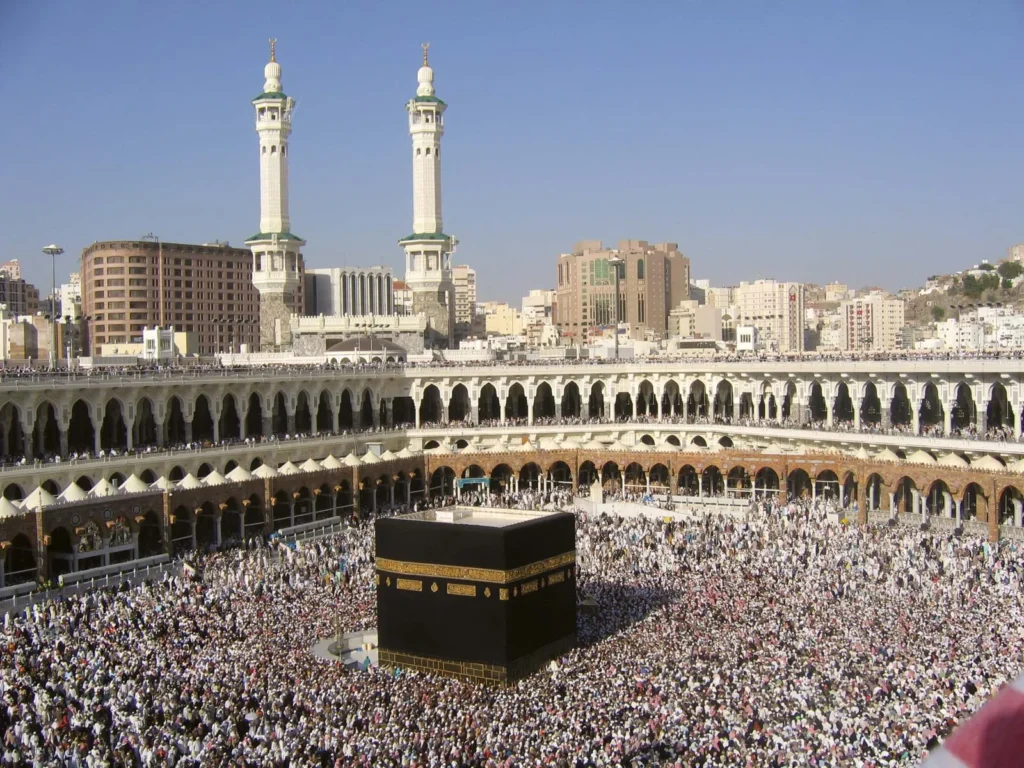
Does This Dream Mean You’ll Actually Go on Hajj?
It’s probably the question people ask most after this dream, so it deserves a straight answer: not necessarily — but it’s one of the most repeated interpretations in the entire tradition, going back to Ibn Sirin himself. He specifically linked the dream to the eventual fulfillment of Hajj for someone who hadn’t yet performed it, and scholars since have echoed that reading many times over. Still, Islamic dream interpretation was never meant to function like a prophecy. It’s understood as one possible sign, shaped heavily by your own intentions and circumstances — not a guarantee stamped on your future.
Seeing Madina in a Dream: What It Means
Madina doesn’t get talked about quite as often as the Ka’bah, but the dream carries its own weight — arguably a more personal one. Where a Ka’bah dream tends to center on your relationship with Allah broadly, a Madina dream leans specifically toward your connection with the Prophet Muhammad (peace be upon him), since it’s his city, his mosque, and his resting place.
Ibn Sirin interpreted dreams of Madina as tied to forgiveness and mercy from Allah — a fairly direct and comforting reading. A few of the more specific scenarios he and others have written about:
- Visiting Madina or the Prophet’s Mosque — read as a sign of enjoining good and steering away from wrongdoing, generally a sign of drawing closer to the Sunnah
- Living in Madina — linked to good sustenance and a settled, peaceful life
- Praying in Madina — connected to avoiding sin, with the specific prayer (Fajr, Dhuhr, Asr, Maghrib, Isha) sometimes adding its own shade of meaning, from blessing in one’s efforts to relief from ongoing distress
- Seeing the Prophet’s grave — often tied to the dreamer eventually performing Hajj or Umrah
- Seeing Madina from a distance, like in the sky — usually just a sign of deep love and longing for the city
If there’s a throughline in how scholars treat this dream, it’s that dreaming of Madina is closely tied to your personal devotion to the Prophet (peace be upon him) — and to a sincere desire to actually live by his example, not just admire it from afar.
Ka’bah Dream vs. Madina Dream: What’s the Difference?
These two dreams usually occur simultaneously; many dream of traveling from Makkah to Madinah in a single night and then being present inside the Haram and instantly appearing at Prophet’s Mosque. However, there is a slight difference:
- When you dream of the Ka’bah, it means that your connection with Allah himself, worship, sincerity, and Hajj come to the fore.
- In case you dream of Madinah, then it signifies that you are dreaming of your connection with Prophet Muhammad (PBUH), following his teachings and receiving his mercy.
There is no difference between these dreams since both of them are equal; both fall under the category of blessed dreams.
How Seriously Should You Take a Dream Like This?
Here’s the part that matters more than any single interpretation above. Islamic scholarship has never treated dream reading as an exact science, and Ibn Sirin himself, for all his authority on the subject, was careful about that distinction. The Prophet Muhammad (peace be upon him) described true dreams as one of the few remaining forms of prophecy after his passing — but he also warned against reading too much certainty into them.
A few things worth keeping in mind:
- Good dreams are traditionally shared only with people you trust and love. The concern isn’t superstition for its own sake — it’s that envy or ill intent from a listener is believed to be able to affect how things unfold.
- However, if your dream causes you some anxiety, you should keep it for yourself. Pray to Allah, forget about it, and do not think about it anymore.
- Context matters! The same dream will carry different meanings depending on whether you are in difficult times or happy, married or single, ill or healthy.
- Do not focus on one symbol. In most cases, classical dream interpreters pay much attention to the overall context: your surroundings, your actions, the way you feel, and events that preceded your awakening.
If your dream about the Ka’bah and Madina was very persistent, you need to consult with a person who is more experienced than any article, including this one. Articles of this kind can help to learn more about possible interpretations of dreams but they are far from being a substitute for actual personal advice.
Frequently Asked Questions
What does it mean to see the Ka’bah in a dream?
Generally, it’s read as a sign of closeness to Allah, sincerity in faith, and good character — and for many, a hint that Hajj may be somewhere in their future.
Is seeing the Ka’bah in a dream a good sign?
In the vast majority of interpretations, yes. It’s considered one of the most praiseworthy dreams in Islamic tradition, though specific details in the dream can shift the meaning.
What does Ibn Sirin say about dreaming of the Ka’bah?
Ibn Sirin linked it to abundant goodness, halal income, the fulfillment of sincere wishes, and — depending on the scenario — marriage, healing from illness, or in rarer cases, a caution about one’s conduct.
What does the significance of seeing Madina in a dream entail?
In general, it is considered to denote forgiveness and mercy of Allah, as well as a closer proximity to the sayings and actions of the prophet Muhammad (Peace be Upon Him).
Will seeing the Ka’bah in my dream mean that I will definitely undertake Hajj?
While it cannot be said that it guarantees going for Hajj, it is perhaps the interpretation that recurs most often amongst the scholars.
What if the Ka’bah looked damaged or dark in my dream?
This is usually read as a warning about the dreamer’s own faith or conduct, or about the wider Muslim community — not anything to do with the Ka’bah itself — and is generally meant as encouragement to return more firmly to religious practice.
Should I share my dream about the Ka’bah with others?
Traditional guidance suggests sharing good dreams only with people you trust, since envy or ill intent from a listener is believed to potentially affect the outcome.
This article draws on commonly cited interpretations from classical Islamic scholars, particularly Ibn Sirin and Al-Nabulsi. Dream interpretation in Islam has never been treated as an exact science, and the true meaning of any dream rests with Allah alone. If a dream has genuinely affected you, consider speaking with a knowledgeable scholar rather than relying only on general readings like this one.